
What Is a Parotid Tumour?
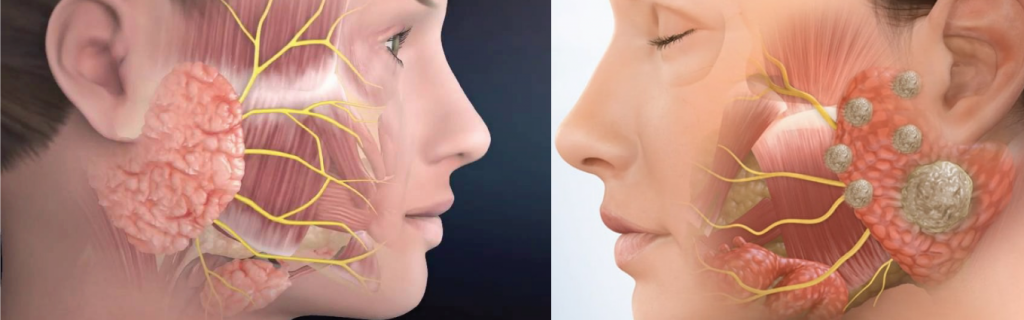
A parotid tumour is an abnormal growth that develops in the parotid gland, the largest of the salivary glands, located just in front of and below the ear. Most parotid tumours are benign, but some are cancerous and require prompt specialist assessment and treatment.
Parotid tumours are uncommon and often grow slowly. Salivary gland tumours account for less than 3% of all head and neck tumours, and around 75–80% of parotid tumours are benign. Many people first notice a painless lump near the jaw or ear and may have it for months or years before seeking medical advice. Although most are not cancerous, any persistent swelling in this area should be assessed.
What Causes a Parotid Tumour and Who Is at Risk?
The exact cause of most parotid tumours is unknown, but certain factors are associated with increased risk. Previous radiation exposure to the head or neck may increase the likelihood of developing a tumour. Smoking has been linked to some benign parotid tumours. In many cases, however, no clear trigger is identified. These tumours often develop gradually without obvious warning signs.
Because the facial nerve passes through the parotid gland, even benign tumours require careful evaluation to protect nerve function during treatment.
What Are the Symptoms and How Is It Diagnosed?
The most common symptom is a lump or swelling near the ear or jaw. This lump is frequently painless, particularly in benign tumours. Other symptoms may include facial asymmetry, discomfort while chewing, or a feeling of fullness near the ear. Cancerous tumours are more likely to cause pain, rapid growth, numbness, or facial weakness. Any new facial weakness should be assessed urgently.
Diagnosis involves clinical examination followed by imaging such as ultrasound, CT, or MRI. A fine needle aspiration biopsy is often performed to determine whether the tumour is benign or malignant. These investigations allow treatment to be tailored appropriately.
How Are Parotid Tumours Treated?
Surgery is the main treatment for both benign and malignant parotid tumours. The aim is to remove the tumour while preserving facial nerve function where possible.
A parotidectomy may involve removing part or all of the gland depending on the tumour’s size and location. Benign tumours are usually cured with surgery alone. Cancerous tumours may require additional radiotherapy, particularly if there is a risk of recurrence.
Parotid surgery carries specific risks because of the facial nerve. Temporary weakness is relatively common after surgery and often improves. Permanent facial nerve injury is uncommon in experienced centres.
What Is the Outlook for a Parotid Tumour?
The outlook is generally very good, especially for benign tumours. The prognosis for cancerous tumours depends on tumour type, size, and whether it has spread. Five-year survival rates for early-stage salivary gland cancers exceed 80%. Early diagnosis and specialist management significantly improve outcomes.
Long-term follow-up is important, as some tumours can recur years after treatment.
FAQs About Parotid Tumours
Are most parotid tumours benign?
Yes. Around three-quarters of parotid tumours are benign, but assessment is still necessary to confirm the diagnosis.
Is a painless lump near the ear serious?
A painless lump is often benign, but any persistent swelling should be evaluated by a specialist.
Can a parotid tumour cause facial paralysis?
Facial weakness is uncommon but may occur if the tumour affects the facial nerve. This requires urgent assessment.
Do all parotid tumours need surgery?
Most do. Surgery is both diagnostic and curative in many cases, particularly for benign tumours.